Robert Wayne Harris’s Background
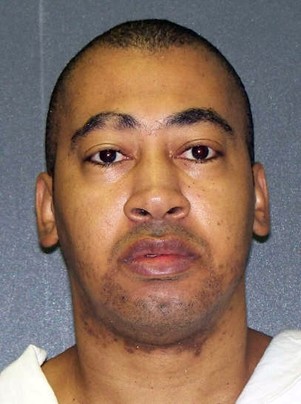
Robert Wayne Harris’s life began on February 28, 1972, in Dallas County, Texas. From the start, his path was marked by tragedy. At just 8 years old, he witnessed an unimaginable horror—his father murdered his mother and then turned the weapon on himself. This traumatic event fractured his world, leaving him to be shuffled from one relative’s home to another.
As Harris tried to navigate his new reality, he developed a stutter and was placed in special education classes. The bullying he endured at school deepened his struggles. By the ninth grade, Harris dropped out entirely and was diagnosed with aggressive conduct disorder after repeated physical altercations with teachers and peers.

At 15, a violent outburst led him to attack a mall clerk and later assault his aunt with a hammer after she reported him for burglary. This crime sent him to a juvenile correctional facility for two years. By 17, Harris was dealing drugs.
In 1991, the 19-year-old committed a string of burglaries, earning probation. However, after fleeing a treatment program, he was sentenced to 8 years in prison, where his behavior spiraled further out of control. Administrative segregation became his norm due to violent outbursts, threats, and even setting his cell on fire.
Harris’ Crime Escalate To Murder
By the time Harris was paroled in 1999, he was a man shaped by violence and resentment. Just months later, on November 29, he abducted Sandra Scott, a 37-year-old woman he suspected of stealing money from him.
He fatally shot her, leaving her body in a desolate area. Though police questioned him, they lacked the evidence to charge him. When Sandra’s truck was found, stripped of everything but the keys. Investigators were unable to obtain any solid evidence, and the case went cold.
In early 2000, Harris found work at the Mi-T-Fine Car Wash in Irving, Texas. But his behavior remained erratic. On March 15th, he was arrested for exposing himself to a female customer.
His termination followed two days later. Embarrassed by his firing and being called a “pervert” by one of his former coworkers, Harris began to plot his revenge. On March 19th, he borrowed a car and acquired a pistol. What followed would shake the community to its core.
On March 20th, 2000, Harris returned to the car wash before it opened. Armed and determined, he forced the manager, Dennis Lee, assistant manager Agustin Villasenor, and cashier Rhoda Wheeler into the office. After making Wheeler open the safe, Harris executed all three—shooting them in the back of the head and slitting Lee’s throat.
But the bloodshed didn’t end there. Three more employees arrived at the car wash, only to be forced to the ground and shot. Benjamin Villasenor and 15-year-old Roberto Jimenez died. The sixth employee survived but was left permanently disabled.
A seventh worker, Jason Shields, showed up during the aftermath. Harris pretended he walked in on the bloody scene, but soon, he pulled a knife, and Shields fled to a nearby donut shop.
Harris followed him to the donut shop and spoke briefly with a 911 operator before disappearing with $4,000.
After getting away, Harris disposed of evidence, changed his clothes, and checked into a motel. But with living witnesses to point the finger at him, he was arrested the very next day. Under interrogation, Harris confessed to the murders and even led authorities to Sandra Scott’s body. He chillingly revealed that the day he was arrested, he had planned to drive to Florida to kill his ex-girlfriend.
Legal Proceedings
Charged with capital murder for the car wash killings, Harris faced a swift trial. Prosecutors presented a clear case, and in September 2000, the jury found him guilty after deliberating for just 11 minutes.
During sentencing, his defense team highlighted his traumatic upbringing and mental health struggles, with experts diagnosing him with depression, antisocial personality disorder, and Tourette’s syndrome. However, the prosecution argued that Harris was fully aware of his actions and had opportunities to choose a different path. After two hours of deliberation, the jury recommended the death penalty.
For over a decade on death row, Harris’s attorneys fought to spare his life, arguing he was mentally disabled and ineligible for execution. However, multiple evaluations concluded otherwise.
Execution
On September 20, 2012, at the Huntsville Unit in Texas, Robert Wayne Harris was executed by lethal injection. His final words expressed love for his friends and an acceptance of his fate. His family didn’t claim his body, and he was buried at the Texas Department of Corrections Captain Joe Byrd Cemetery in Huntsville
DOB:
February 28th, 1972Conviction(s):
- Capital murder (2 counts)
- Burglary
- Evading Arrest
Date of crime:
March 20th, 2000Location(s):
Irving, TXDate of arrest:
March 21st, 2000Details:
Mass murderer.Confirmed Victim(s):
- Sandra Estes Scott (37)
- Dennis Lee
- Agustin Villaseñor
- Rhoda Wheeler
- Benjamin Villasenor
- Roberto Jimenez (15)
- One survivor
Method:
ShootingMotive(s):
Revenge after being firedSentence:
Sentenced to death on October 6th, 2000Current whereabouts:
Deceased; executed by lethal injection on September 20, 2012Last Updated on 09/30/2026