Cleophus Prince Jr’s Background
Cleophus Prince Jr.’s story begins in the small town of Birmingham, Alabama, where he was born on July 24, 1967. His early life was unremarkable, with a modest upbringing that gave no hint of the horrors he would later unleash.
Prince enlisted in the United States Navy as a young adult in search of purpose, hoping to carve out a stable future. But beneath the surface of discipline and duty, darker tendencies began to emerge.
By 1989, while still serving in the Navy, Prince’s troubles came to light. He was court-martialed for larceny, a charge that showed his inability to follow rules or respect boundaries. Convicted and sentenced in October 1989, Prince served two months and was recommended for discharge. It was a pivotal moment in his life that sent him on a downward spiral.
He moved to the Buena Vista Gardens apartment complex in San Diego County, California, just months after leaving the Navy. With its maze of buildings and diverse residents, the complex would soon become the backdrop for a chilling spree.
Murder Spree
The first known murder occurred on January 12, 1990. Tiffany Paige Schultz, a 20-year-old woman living in Prince’s apartment complex, was found brutally stabbed in her home. Her boyfriend was initially arrested but quickly released when no evidence linked him to the crime.
The police had little to go on, and the case went unsolved.
Just over a month later, on February 16, Prince violated and murdered 21-year-old Janene Marie Weinhold in a strikingly similar fashion in the same complex. DNA evidence later tied Prince to her killing, but at the time, investigators were still piecing together the connections.
Weinhold’s grieving parents channeled their loss into something positive, donating money to fund playground equipment in her memory, but the shadow of fear in the community was growing.
In April, Holly Suzanne Tarr, an 18-year-old visiting her brother at the Buena Vista Gardens complex, became the next victim. Prince was interrupted during this murder, but he covered his face and got away.
At that point, police began to suspect they were dealing with a serial killer.
The pattern was undeniable: the killer struck during daylight hours, entering through unlocked doors or windows, targeting women who were home alone, often while they were showering.
As the months rolled on, more lives were claimed. Elissa Naomi Keller, a 38-year-old resident of a different complex where Prince moved in May 1990, was stabbed to death. Pamela Clark and her 18-year-old daughter, Amber, were attacked together in September. The brutal slayings of the Clarks, a mother and daughter, sent shockwaves through the University City neighborhood. By then, the police had launched the largest manhunt in San Diego history.
Investigation and Capture
Investigators described the killer as a “disorganized opportunist,” someone who struck without elaborate planning but relied on moments of vulnerability. Witness accounts and patterns suggested that Prince may have stalked some of his victims, watching their routines before making his move.
But Prince was not merely a predator. He was brazen and callous. He kept trophies from his victims, including rings and jewelry, which he later gifted to his girlfriend or wore himself. He even bragged about the killings to friends, showing no remorse for the terror he had wrought.
The killer’s reign ended in February 1991, thanks to a near-miss. Prince followed a woman home from Miramar Fitness Club. As she prepared to shower, she heard a noise at her front door and fled to a neighbor’s house for help. Her neighbor confronted Prince, who claimed he was looking for a friend but quickly retreated.
The witnesses took down his license plate number and reported it to the police.
This lead proved invaluable. Police traced the plate and arrested Prince in the parking lot of a health club on February 4, 1991. He provided DNA samples that directly linked him to the murder of Janene Weinhold. That connection unraveled the web of crimes, tying him to the other killings through their shared patterns.
Legal Proceedings
The evidence against Prince was overwhelming, and a judge ordered him to stand trial in March 1992.
Throughout the trial, Prince showed no signs of remorse. The courtroom was filled with the anguished families of his victims, who sought justice for the lives he had destroyed.
By July 1993, he was found guilty of six counts of first-degree murder and nearly two dozen other felony charges, including burglaries and attempted burglaries. The jury deliberated further, ultimately recommending the death penalty. On November 5, 1993, the judge upheld the jury’s decision, sentencing Prince to death.
Now 59, Cleophus Prince Jr. sits on death row at San Quentin State Prison.
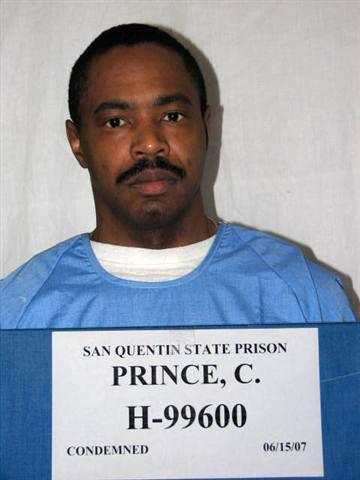
DOB:
July 24th, 1967Conviction(s):
- First-degree murder with special circumstances (6 counts)
- Rape
- Burglary (14 counts)
- Attempted burglary (6 counts)
- Robbery
- Perjury
Date of crime:
January 12th, 1990Location(s):
San Diego, CADate of arrest:
March 3rd, 1991Details:
He killed 6 women in 1990.Confirmed Victim(s):
- Tiffany Paige Schultz (20)
- Janene Marie Weinhold (21)
- Holly Suzanne Tarr (18)
- Elissa Naomi Keller (38)
- Pamela Gail Clark (42)
- Amber Clark (18)
Method:
StabbingSentence:
Sentenced to death on November 5, 1993Current whereabouts:
California State Prison in Sacramento, CALast Updated on 08/11/2026